How AI, smart cities, startups and green tech are shaping the city’s next decade
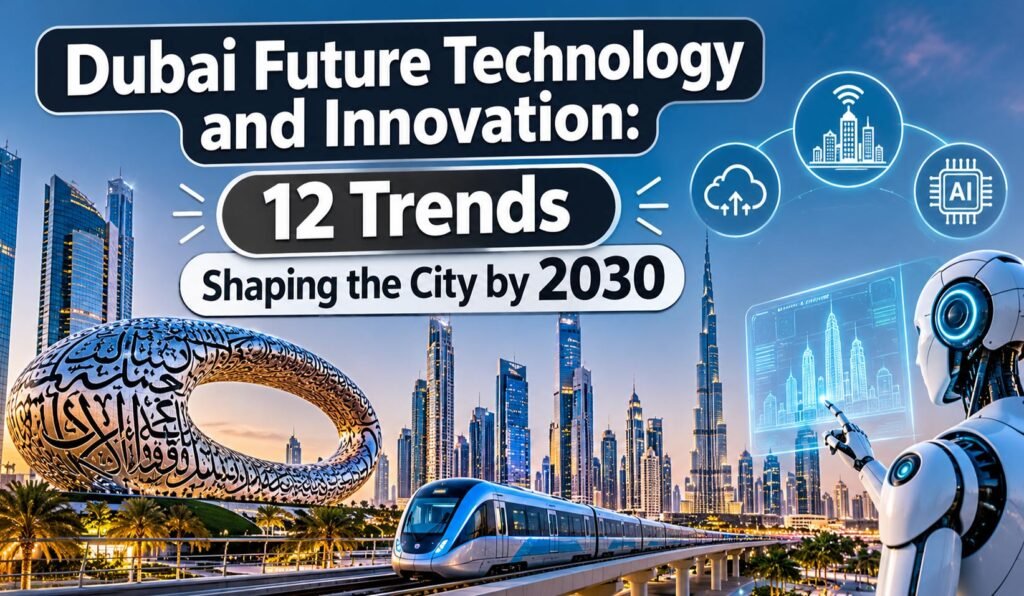
Dubai has gone from a desert trading port to one of the most talked-about tech cities on the planet in just a few decades. The city now wants to be a place where new ideas are tested, funded and launched at full speed. Oil once powered its growth, but today the focus is on data, software, robots and clean energy. Government offices run on apps, taxis are being tested without drivers, and a flying taxi service is on the way.
This guide explains how Dubai future technology and innovation really works on the ground. You will see the plans behind it, the tools already in use, the startup scene, the jobs on offer and the challenges that still need fixing. By the end, you will know where Dubai stands today and what the city could look like in 2030.
Dubai’s Vision for a Technology-Driven Future
Dubai’s vision is simple: build an economy that depends on knowledge and technology instead of oil. Every major plan the city has launched in the last ten years follows that idea, and each one comes with clear targets that anyone can track.
The UAE Vision and Dubai Economic Agenda (D33)
The Dubai Economic Agenda, known as D33, was launched in January 2023. Its main goal is to double the size of Dubai’s economy by 2033 and place the city among the top three global cities for business. It also sets out to add around 100 new economic initiatives, with digital trade, advanced technology and new industries at the center. D33 sits beside the wider UAE Vision, which pushes the whole country toward a knowledge-based economy.
Dubai’s Digital Transformation Strategy
Dubai’s digital transformation strategy aims to move almost every government and business service online. The city started with its Paperless Strategy, which helped government bodies drop paper in daily work and saved large amounts of money and time. The newer Dubai Digital Strategy, launched in 2023, builds on that base. It focuses on digital services, data sharing and a stronger digital economy for both residents and companies.
Why Innovation Is a Key Growth Pillar
Innovation matters because it brings new industries, new jobs and new income without relying on oil. Dubai’s own leaders have said that oil makes up only a small slice of the emirate’s economy today, while trade, tourism, finance, logistics and technology carry most of the weight. Each new tech sector, such as AI or fintech, creates fresh demand for skilled workers, office space, investors and support services.
Public-Private Collaboration in Technology Development
Dubai builds new technology through teamwork between government bodies and private companies. A government department often names a problem, such as traffic or energy use, and then invites startups and global firms to test solutions in real life. The Dubai Future Accelerators program works this way. It matches companies with government entities, so a good idea can move from a pitch to a live pilot in a few months instead of years.
Smart Dubai and the Evolution of Smart Cities
Dubai started its smart city journey in 2013 with a plan to make the whole city connected, efficient and easy to live in. Over the years, the effort has grown from a few online services into a full digital system for the emirate.
What Makes Dubai a Smart City
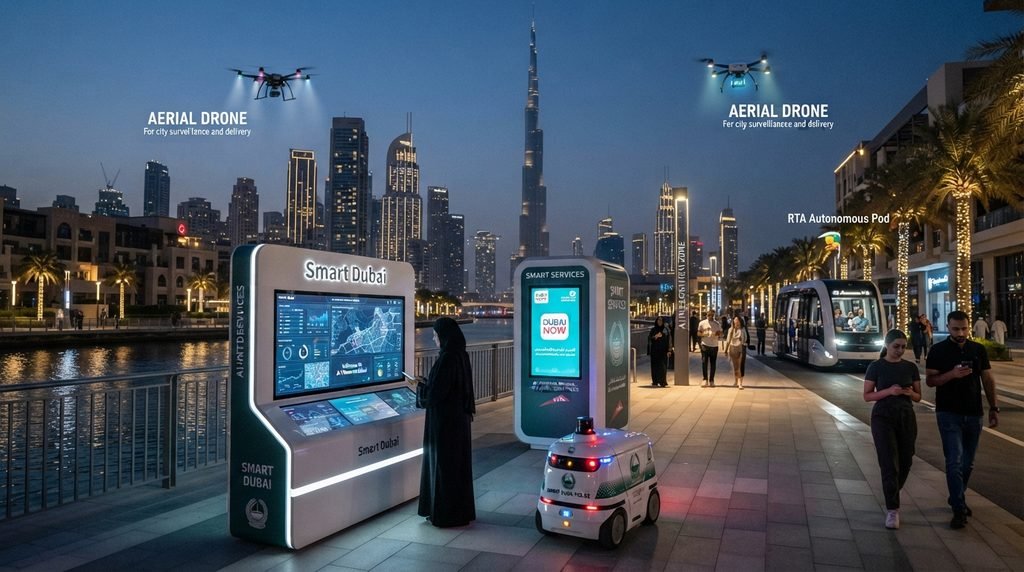
A smart city uses data, sensors and digital tools to improve daily life, and Dubai ticks all of those boxes. Residents can pay bills, renew licenses and book services from a phone. Sensors track traffic, energy and water use. Strong internet coverage and a single digital identity tie it all together, so people do not need to visit offices or carry stacks of paper.
Smart Government Services and Digital Platforms
Dubai offers hundreds of government services through one app. The DubaiNow app brings together more than 200 services from dozens of government and private entities, covering things like utility bills, traffic fines, school fees and visa renewals. UAE Pass gives residents a trusted digital ID, so they can sign documents and log in to services without visiting a counter. Our guide to digital banking in the UAE shows how the same shift is changing money management.
AI-Powered Public Services
AI now helps handle questions, requests and routine checks across Dubai’s public services. Chatbots answer common questions around the clock, and smart systems help sort applications faster. Dubai Police uses AI tools for tasks like language translation and data analysis, and several departments have tested virtual assistants to cut waiting times. The aim is to let staff spend more time on complex cases while software handles the repeat work.
Smart Infrastructure and Urban Planning
Dubai uses data to plan roads, buildings and utilities before they are built. The Dubai 2040 Urban Master Plan lays out where homes, parks, jobs and transport links should go, with the goal of putting most daily needs within a 20-minute trip from home. Smart meters, connected streetlights and sensor-based water systems help the city respond to demand in real time instead of guessing.
Benefits for Residents, Businesses, and Tourists
Smart city tools save time for almost everyone who lives in or visits Dubai. Residents finish paperwork online, businesses get licenses faster, and tourists use digital maps, contactless payments and smart entry gates at the airport. Faster services also cut costs for companies, which is one reason so many global firms choose Dubai as their regional base.
Artificial Intelligence (AI) in Dubai
AI is the biggest driver behind Dubai future technology and innovation right now. The city treats it as a tool for growth, not just a trend, and has put rules and funding behind it.
Dubai’s AI Strategy and Objectives
Dubai’s AI plan sits inside the wider UAE Strategy for Artificial Intelligence 2031, which aims to make the country a global AI leader. The UAE was also the first country to appoint a Minister of State for Artificial Intelligence, back in 2017. In 2024, Dubai launched its Universal Blueprint for Artificial Intelligence, which sets out how government bodies should adopt AI and name Chief AI Officers to lead the work.
AI Adoption Across Government Departments
Government departments in Dubai are adopting AI step by step, with clear ownership in each one. Many entities now have a Chief AI Officer who decides where AI fits best, whether that is customer service, planning, safety or data analysis. If you want to see how self-running systems fit into this picture, read our deep dive on agentic AI in Dubai.
AI in Healthcare, Education, and Transportation
AI is already at work in three of Dubai’s most important sectors. In healthcare, hospitals use it to help read scans and manage patient data. In education, schools and universities test tools that adapt lessons to each student. In transport, the Roads and Transport Authority uses AI to manage signals, predict congestion and support driverless vehicle trials.
Generative AI and Emerging Applications
Generative AI is moving fast in Dubai, from writing tools to design and customer support. The city has hosted large AI events and set up the Dubai AI Campus in DIFC, which brings together startups, investors and big tech firms. Businesses use generative tools for marketing, reports and coding help. For a practical list, see our roundup of the best AI tools for UAE businesses.
Opportunities and Challenges of AI Integration
AI brings big gains, but it also brings real risks. On the plus side, it can cut costs, speed up services and open new job types. On the other side, companies must protect personal data, avoid biased results and train staff to work alongside new tools. Dubai has tried to balance both by issuing AI ethics guidelines and encouraging open testing.
Blockchain and Digital Economy Initiatives
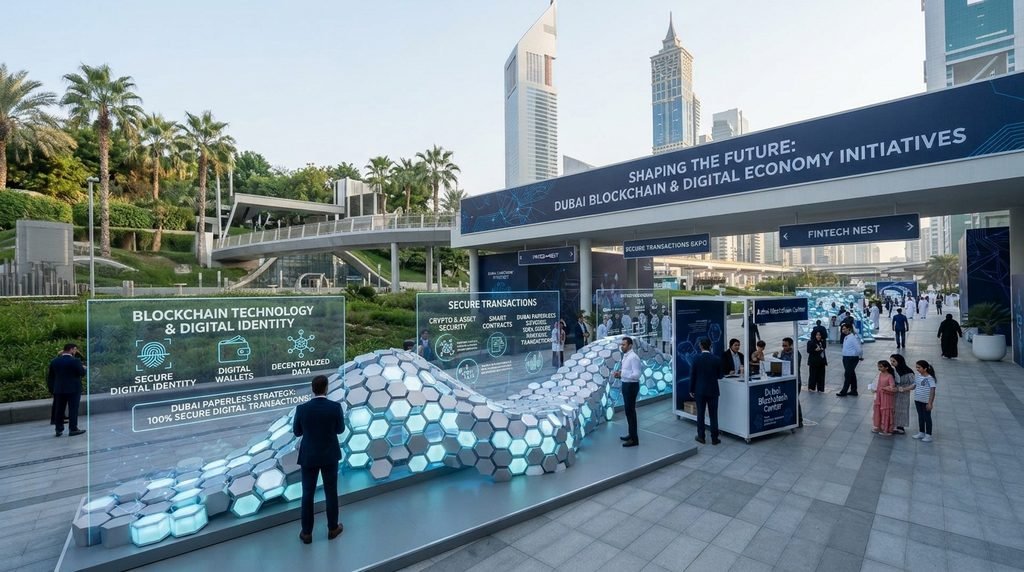
Dubai was one of the first governments in the world to take blockchain seriously. The city saw it as a way to make records safer, cut paperwork and build trust in digital deals.
Dubai’s Blockchain Adoption Journey
Dubai started its blockchain journey in 2016 with the Dubai Blockchain Strategy, which set the goal of becoming the first blockchain-powered government. The plan focused on three areas: government efficiency, new industries and international leadership. Since then, many departments have tested blockchain for records, contracts and payments.
Digital Identity and Secure Transactions
A secure digital identity lets people prove who they are online without sharing paper copies. UAE Pass is the national system that does this, and millions of people now use it to log in, sign documents and access services. Blockchain adds an extra layer of safety, because records are hard to change once they are written.
Blockchain Applications in Government Services
Dubai uses blockchain in land records, business licensing and trade documents. The Dubai Land Department has run projects to record property data on blockchain, and in 2025 it began work on tokenizing real estate so people can own digital shares of property. These steps make deals faster and easier to check.
Impact on Business Efficiency and Transparency
Blockchain helps companies cut delays and lower the chance of fraud. When every party in a deal sees the same record, there is less room for disputes. Banks, logistics firms and real estate agents benefit most, because their work depends on trusted documents that pass through many hands.
Future Outlook for Blockchain Innovation
Blockchain in Dubai is likely to grow through tokenized assets, digital payments and clearer rules for virtual assets. The Virtual Assets Regulatory Authority, known as VARA, was created in 2022 to license and supervise crypto firms in Dubai. That clear framework gives investors more confidence and attracts serious players to the market.
Dubai’s Growing Startup and Innovation Ecosystem
Dubai’s startup scene has grown fast because the city makes it simple to start, fund and grow a company.
Why Startups Choose Dubai
Startups choose Dubai for its tax rules, global location and easy company setup. There is no personal income tax, and the UAE corporate tax rate is 9 percent on profits above AED 375,000, which is low compared with many countries. Founders can set up in a free zone in days, and flights connect Dubai to most major markets within a few hours. The city also draws a mix of talent from all over the world.
Technology Incubators and Accelerators
Dubai has many places that help young companies grow. Dubai Internet City and Dubai Silicon Oasis host thousands of tech firms, while in5 offers startup space and mentoring. The DIFC Innovation Hub focuses on fintech and AI. These centers give founders offices, advice, and quick access to customers and partners.
Access to Funding and Venture Capital
Funding is easier to find in Dubai than it used to be. The Dubai Future District Fund, launched with AED 1 billion, backs startups in future-focused sectors. Local and global venture capital firms, family offices and government-linked funds also invest in the region, and many founders raise money without leaving the city.
Innovation-Friendly Regulations
Dubai writes its rules to help new ideas, not slow them down. Regulatory sandboxes let companies test products under light supervision before a full launch. Since 2021, the UAE has allowed full foreign ownership of most onshore companies, and the Golden Visa gives entrepreneurs and skilled workers a 10-year stay. These steps make Dubai a safer place to build something new.
Success Stories of Technology Startups
Several Dubai-born companies prove the model works. Careem, the ride-hailing app founded in Dubai, was bought by Uber in 2019 in a deal worth about 3.1 billion US dollars. Property Finder, Kitopi and others have also grown into regional leaders. These wins inspire new founders and bring more investors to the city.
Emerging Technologies Transforming Dubai
Beyond AI and blockchain, a set of newer tools is changing how the city runs, builds and entertains.
Internet of Things (IoT)
The Internet of Things connects everyday objects, like meters, lights and cars, to the internet so they can share data. In Dubai, DEWA uses smart meters and connected grids to track power and water use, while sensors in buildings and roads help teams spot faults early. This cuts waste and lets the city fix problems before residents notice them.
Robotics and Automation
Robots in Dubai already work in security, delivery, cleaning and customer service. Dubai Police has used patrol robots and a smart police station that runs with very little staff. Warehouses at Jebel Ali and Dubai airports use automation to move cargo faster, which supports the city’s role as a global trade hub.
Digital Twins and Smart Infrastructure
A digital twin is a virtual copy of a real place or system, and Dubai uses the idea to plan and manage the city. Engineers can test how a new tower affects traffic, shade or power demand before a single brick is laid. Utility teams also use twins to watch networks live and predict when equipment might fail.
Augmented Reality (AR) and Virtual Reality (VR)
AR and VR in Dubai go well beyond games. The Museum of the Future, which opened in 2022, uses immersive displays to show visitors how life could look in 2071. Training centers use VR for safety and medical practice, and the Dubai Metaverse Strategy aims to create 40,000 virtual jobs by 2030 and add about 4 billion US dollars to the economy.
Quantum Computing Prospects
Quantum computing is still early in Dubai, but the interest is real. The UAE already supports quantum research through institutes in the wider country, and Dubai’s focus is on getting ready for secure, quantum-safe systems and future research partnerships. Most businesses will not use quantum tools soon, yet banks and security teams are already watching the field closely.
The Future of Mobility and Smart Transportation
Transport is where residents will notice change first, because Dubai wants to move people faster with fewer cars and less pollution.
Autonomous Vehicles and Self-Driving Transport
Dubai’s Autonomous Transportation Strategy targets 25 percent of all trips being driverless by 2030. The Roads and Transport Authority has worked with companies such as Baidu Apollo Go, WeRide and Uber on robotaxi trials, with early commercial launches taking place in 2026. The city expects the shift to save billions of dirhams a year in lower accident, fuel and parking costs.
Smart Traffic Management Systems
Smart traffic systems use cameras, sensors and AI to keep vehicles moving. Signals adjust to real-time flow, and the Salik toll gates charge drivers without making them stop. Dubai also keeps expanding the metro, including the new Blue Line, a 30 kilometer route with 14 stations that is planned to open in 2029.
Electric Vehicle (EV) Adoption
Dubai wants more electric cars on its roads and is building the charging network to match. The city has a target of 42,000 electric vehicles by 2030, and DEWA runs the public EV Green Charger network with over a thousand charging points. Owners also get perks such as free or reduced parking and lower toll costs in some cases.
Future Air Mobility and Flying Taxis
Flying taxis could start carrying passengers in Dubai in 2026. Joby Aviation has an agreement with the RTA to run an electric air taxi service, and the first vertiport is being built near Dubai International Airport. A trip from the airport to Palm Jumeirah is expected to take about 12 minutes, compared with roughly 45 minutes by car.
Sustainable Transportation Innovations
Sustainable transport in Dubai goes beyond electric cars. The city is building more cycling tracks, expanding water taxis and buses with cleaner engines, and testing hydrogen fuel for heavy vehicles. Together these changes aim to cut emissions while keeping the city easy to move around.
Sustainable Technology and Green Innovation
Technology and sustainability are closely linked in Dubai, because the city needs smart tools to reach its climate goals.
Smart Energy Solutions
Smart energy tools help Dubai use less power and waste less water. DEWA’s smart grid reads meters remotely, spots leaks and lets customers track their own use through an app. AI also helps predict demand during hot summer months, so the grid stays stable.
Renewable Energy Integration
The Mohammed bin Rashid Al Maktoum Solar Park is the heart of Dubai’s clean energy plan. When complete, it is planned to produce 5,000 megawatts by 2030, making it one of the largest single-site solar projects in the world. The Dubai Clean Energy Strategy 2050 aims for 75 percent of the emirate’s power to come from clean sources by 2050.
Technology Supporting Sustainability Goals
Tech supports sustainability by measuring what is happening and then guiding better choices. Sensors track air quality, AI helps plan energy use in buildings, and digital tools let companies report their carbon output. Without that data, it would be very hard to know if targets are being met.
Green Buildings and Smart Communities
Dubai requires new buildings to meet green standards through its Al Sa’fat rating system. Communities like Sustainable City show how homes can run on solar power, recycle water and keep cars at the edge of the neighborhood. These projects prove that smart design and everyday comfort can go together.
The Role of Innovation in Net-Zero Objectives
Innovation is what makes net zero possible, because current tools alone are not enough. The UAE has set a goal of net-zero emissions by 2050, and Dubai backs it with solar, green hydrogen, carbon capture research and energy-saving technology. Dubai also hosted the COP28 climate summit in 2023, which put these topics in front of the whole world.
Dubai Future Foundation and Innovation Programs
The Dubai Future Foundation is the body that turns big ideas about tomorrow into real projects.
Mission and Role of Dubai Future Foundation
The Dubai Future Foundation was set up in 2016 to shape the future of the city. It works as a think tank, an innovation lab and a project builder at the same time. Its job is to study new trends, test fresh ideas with government bodies and attract talent and companies from around the world.
Area 2071 and Innovation Labs
Area 2071 is the foundation’s home for future-focused work, located at the Museum of the Future. It hosts labs, workshops and meeting spaces where startups, researchers and officials can work together. The area is named after the UAE Centennial 2071 plan, which sets long-term goals for the country’s 100th anniversary.
Future Foresight and Innovation Challenges
Future foresight means studying trends early so leaders can prepare. The foundation publishes reports on topics like AI, mobility and work, and runs challenges where teams compete to solve city problems. These events give government bodies fresh ideas and give founders a clear path to real customers.
Supporting Entrepreneurs and Researchers
The foundation backs both founders and researchers through programs and funding. Dubai Future Accelerators connects companies with government departments for live pilots, and Dubai Future Labs gives builders a place to prototype. Researchers get access to partners and real-world data they would struggle to find alone.
Impact on Dubai’s Innovation Ecosystem
The foundation has helped make innovation a normal part of how Dubai works. Hundreds of companies have taken part in its programs, and many pilots have grown into full services. Just as important, it has changed the mindset inside government, so testing new ideas is now seen as a strength.
Technology Careers and Opportunities in Dubai
As the city adds new tech, it also needs skilled people to build, run and protect it.
High-Demand Technology Skills
The skills most wanted in Dubai right now are AI and machine learning, data analysis, cybersecurity, cloud computing and software development. Employers also look for people who can mix technical skills with communication and project management. Short certificates in these areas can help even if you do not have a computer science degree.
Career Opportunities in AI and Data Science
AI and data roles are among the best paid in the UAE. Data analysts, machine learning engineers and AI product managers are in demand across banks, hospitals, retail and government. Salaries for experienced AI engineers often range from AED 20,000 to well above AED 40,000 a month, depending on skills and company size.
Opportunities for Developers and Engineers
Developers and engineers can find work in startups, global tech firms and large regional companies. Fintech, e-commerce, logistics and smart city projects all hire coders. The UAE’s One Million Arab Coders initiative, launched in 2021, also offers free training to help more people build these skills.
Freelancing and Tech Entrepreneurship
Dubai makes it fairly easy to work for yourself. Freelance permits are available through several free zones, and the Golden Visa is open to many entrepreneurs and skilled professionals. Freelancers in design, coding, content and consulting can serve clients across the Gulf from one base.
Future Job Market Trends
The job market will keep leaning toward AI, green energy, cybersecurity and digital health. Routine tasks will be automated, and new roles will appear, such as AI trainers, drone operators and sustainability analysts. If you are looking at the public sector, our guide to government jobs in Dubai explains how to apply and get hired.
Challenges and Opportunities for Future Innovation
Every fast-growing tech city faces hard questions, and Dubai is no different.
Cybersecurity and Data Privacy
More connected systems mean more targets for hackers. Dubai has the Dubai Electronic Security Center, which sets rules and watches for threats, and the UAE has a federal data protection law that came into force in 2021. Companies must keep improving their defenses, because one breach can damage trust quickly.
Technology Regulations and Governance
Good rules help new technology grow safely. Dubai has used sandboxes, special regulators like VARA and AI ethics guidelines to give businesses clear direction. The challenge is to keep laws flexible enough for new tools while still protecting people.
Talent Development and Digital Skills
The city needs more skilled workers than it can train locally, so it relies on both education and global hiring. Universities, coding programs and long-term visas all help. Building strong local talent will matter even more as AI and automation spread.
Balancing Innovation with Sustainability
Data centers, AI models and new buildings all use energy. Dubai must make sure its tech growth does not undo its climate goals, which is why clean power and efficient design are built into many projects. Getting this balance right is a major test for the next decade.
Future Investment Opportunities
Investors can look at AI, fintech, clean energy, smart mobility, health technology and data infrastructure. Free zones, strong ports and growing demand make Dubai a good launch point for the wider region. As always, investors should check the rules, risks and returns before committing money.
What Will Dubai Look Like in 2030 and Beyond?
By 2030, many of the plans described above will be part of everyday life.
Predicted Technology Trends
Expect AI assistants in almost every service, more robotaxis, wider use of digital IDs and a bigger role for tokenized assets. Clean energy will keep growing, and more homes and offices will use smart controls to save power. Some of these trends depend on rules and costs, so timelines may shift.
The Rise of Autonomous and Connected Cities
A connected city links vehicles, buildings and services through shared data. Dubai’s goal of 25 percent driverless trips by 2030 is a big step in that direction. Over time, traffic signals, cars and public transport will talk to each other to cut waiting and keep roads safer.
AI-Driven Urban Living
Life in Dubai will become more personal and more automatic. Your phone may handle your paperwork, book your health checks and suggest the fastest way home. Homes will adjust energy use on their own, and public services will reach out before you even ask.
Future Business and Investment Landscape
Business in Dubai will lean even more on digital trade, fintech, logistics tech and green industry. D33 aims to double the economy by 2033, which should bring more global headquarters, more funding and more startups to the city.
Dubai’s Position in Global Innovation Rankings
Dubai already ranks near the top of the region in many global city and innovation lists. The UAE is placed first among Arab countries and around the thirtieth spot worldwide in the Global Innovation Index. Climbing further will depend on research output, talent and how well the city turns plans into results.
Conclusion
Dubai future technology and innovation is no longer just a vision on paper. AI is running inside government, blockchain is protecting records, startups are finding funding, and the city is preparing for driverless cars and air taxis. At the same time, real challenges around data safety, skills and energy use still need steady attention.
For residents, this means faster services and more job choices. For businesses and entrepreneurs, it offers a friendly place to test and grow ideas. For investors, it opens doors in AI, clean energy, mobility and digital finance. If Dubai keeps matching bold goals with real delivery, 2030 could look very different from today. To keep reading about the city’s tech scene, visit our Dubai tech section.
Frequently Asked Questions (FAQs)
Why is Dubai investing heavily in technology and innovation?
Dubai wants an economy that does not depend on oil and can keep growing for decades. Technology creates new industries, high-paying jobs and better public services. Plans like D33 aim to double the economy by 2033, and innovation is a main tool for reaching that goal.
What are the most important future technologies in Dubai?
The most important ones are artificial intelligence, blockchain, autonomous vehicles, the Internet of Things, digital twins, clean energy tech and air mobility. AI and clean energy have the strongest backing, because they affect almost every sector from government to transport.
How is AI being used in Dubai?
AI is used in government services, healthcare, education, traffic control and policing. Chatbots answer public questions, smart systems manage traffic signals, and hospitals use AI to support scan reading. Many government bodies now have a Chief AI Officer who guides how it is used.
What is the Dubai Future Foundation?
The Dubai Future Foundation is a government-backed organization created in 2016 to shape the city’s future. It runs programs like Dubai Future Accelerators, manages the Museum of the Future and Area 2071, and helps startups and researchers test ideas with government partners.
Is Dubai a good place for technology startups?
Yes, for many founders it is. Dubai offers no personal income tax, a 9 percent corporate tax on profits above AED 375,000, fast company setup, Golden Visas and access to funding. The main downsides are high living costs and strong competition for talent.
What technology jobs are in high demand in Dubai?
AI engineers, data scientists, cybersecurity experts, cloud engineers, software developers and fintech specialists are among the most wanted. Roles linked to clean energy, robotics and smart city projects are also growing quickly.
How is Dubai becoming a smart city?
Dubai is becoming a smart city by moving services online, using sensors and data to manage infrastructure, and adding AI to public services. Apps like DubaiNow, the UAE Pass digital ID and connected utilities all play a part, along with long-term plans such as the Dubai 2040 Urban Master Plan.
What is the future of innovation in Dubai?
The future points toward driverless transport, air taxis, wider AI use, tokenized assets and cleaner energy. Dubai aims to rank among the top global cities by 2033, and innovation will be central to how it gets there.

Ahmad Yusuf is a professional content writer with experience creating engaging, well-researched content across lifestyle, travel, and business topics. With a strong understanding of Dubai’s dynamic culture and experiences, he currently writes for Dubai Unfold, covering the city’s attractions, lifestyle, events, and evolving trends. His work combines clear storytelling with accurate information to help readers discover and experience Dubai.