
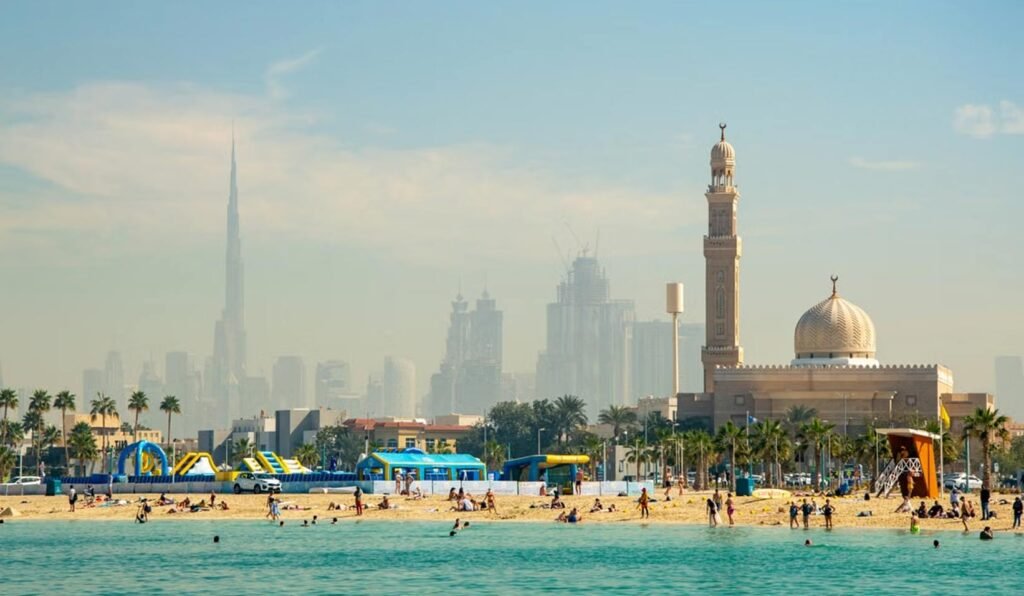
If you live in Dubai or you’re just visiting for a few days, chances are you’ll want to spend at least one afternoon by the sea. The good news is you don’t need a hotel room or a beach club membership to do that. Dubai has a long stretch of coastline that anyone can walk onto, lay a towel down, and jump into the water.
Public beaches matter here because they’re the one part of Dubai’s shoreline that belongs to everyone. Tourists on a budget, families who want a cheap day out, fitness lovers who need a running track, and residents who just want to unwind after work all end up on the same sand. That mix is part of what makes these beaches feel alive.
The main difference between a public beach and a hotel or private beach is simple: cost and rules. Private beaches usually charge a day-use fee or only let guests in, and they hand you towels and loungers. Public beaches are free (or close to it), a bit more basic, and you bring your own gear. What you lose in luxury, you gain in freedom — you can show up any time, stay as long as you want, and not spend a single dirham.
As for cleanliness and safety, Dubai Municipality keeps a close eye on its public beaches. Most of the well-known ones have lifeguards on duty during the day, regular sand and water cleaning, and clear signage about swimming zones. It’s not identical everywhere though, so knowing which beach fits your plans makes a real difference, and that’s exactly what this guide covers.
Overview of Dubai’s Coastal Zones
Dubai’s coastline isn’t one long uniform strip. It’s made up of a few distinct zones, each with its own personality.
The Jumeirah coastline is the classic Dubai beach stretch, running past Jumeirah 1, 2, and 3. It’s where you’ll find some of the oldest and most loved public beaches in the city.
The Dubai Marina and JBR coastline sits further south and is the busiest, most built-up section. This is where skyscrapers meet the sea, and it’s the go-to spot for anyone who wants a beach day with a city skyline in the background.
The Umm Suqeim coastline sits between Jumeirah and Marina, and it’s known for one thing above all else: the view of the Burj Al Arab. This stretch includes Kite Beach and Sunset Beach.
The Al Sufouh and Palm-facing coastline runs close to Palm Jumeirah and is quieter and less developed. It’s the part of Dubai’s coast that still feels a little wild.
The Deira and Al Mamzar coastline is on the opposite end of the city, close to the Sharjah border. It’s calmer, more local, and centres around Al Mamzar Beach Park.
There are also a few environmental protection zones along the coast, including marine reserves near Jebel Ali and parts of the coastline set aside to protect turtle nesting and coral. These areas have tighter rules on fishing, boating, and construction, and they’re part of why Dubai’s beaches have stayed relatively clean despite rapid growth.
Detailed Profiles of Major Public Beaches
JBR Beach (The Beach, Jumeirah Beach Residence)
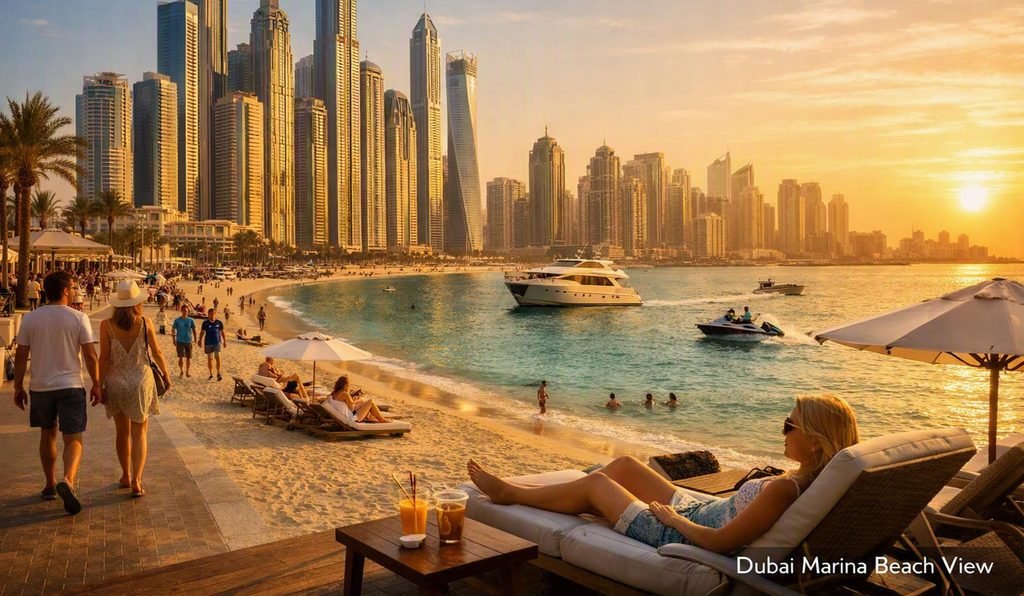
JBR Beach sits along the Jumeirah Beach Residence waterfront in Dubai Marina, right behind The Walk. It’s one of the longest and most visited public beaches in the city, and it’s completely free to enter.
The sand here is soft and white, and the water slopes gently, which makes it easy and safe to wade in. Lifeguards are on duty, and swimming areas are marked off with buoys. The beach also has a 600-metre running track, an outdoor gym, and volleyball courts scattered along the sand. planetwarebayut
For families, JBR works well because of the shallow entry point, shaded rest areas, and a kids’ play zone right on the beach. You’ll also sometimes see camel rides passing by, which kids tend to love.
You’re allowed to swim, jog, play volleyball, and rent water sports gear like jet skis or paddleboards. What you can’t do is bring pets, light a barbecue, or wander around without proper swimwear — Dubai’s public beaches expect modest swim attire, and full nudity or overly revealing clothing isn’t permitted.
Kite Beach
Kite Beach, in the Umm Suqeim area, is probably the most popular public beach among Dubai residents, and it’s easy to see why. It has a sporty, community feel that’s different from the more touristy JBR.
The beach earned its name from kite surfing, and you’ll still see colourful kites in the sky most windy afternoons. But it’s grown into much more than that — there’s a running and cycling track that stretches for several kilometres along the coast, plus volleyball courts, outdoor gyms, and a skate park nearby.
As for the water, it’s generally calm near the shore, with a marked swim zone where lifeguards keep watch. Further out, conditions pick up a bit, which is exactly what makes it good for kite surfing and paddleboarding.
Getting there is straightforward — there’s parking along Jumeirah Road, though it fills up fast on weekends, so arriving early is your best bet.
Jumeirah Public Beach
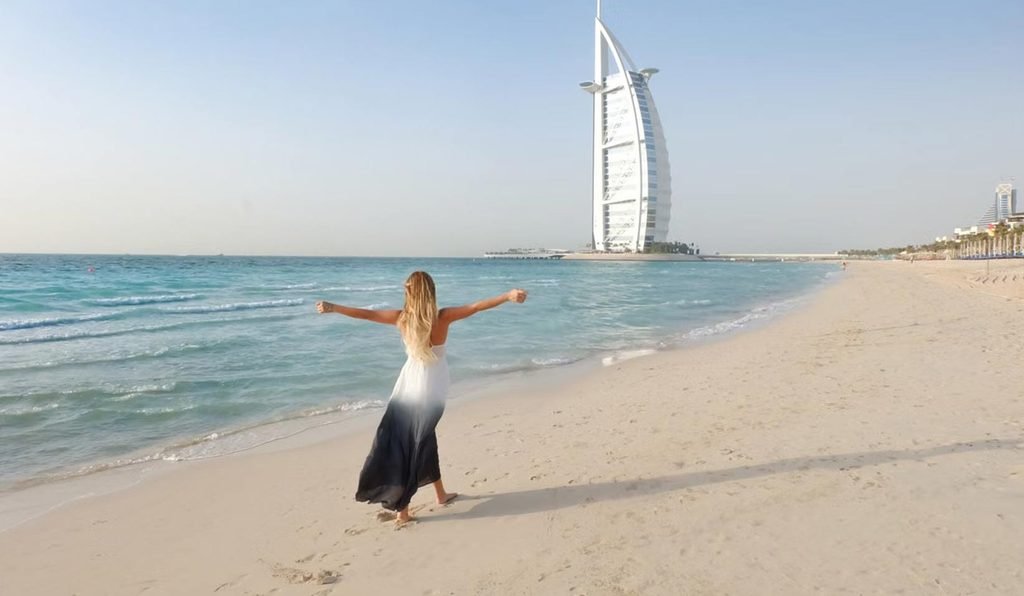
This is what most people picture when they think of a classic Dubai beach day. Jumeirah Public Beach, sometimes called Jumeirah Open Beach, is a long sandy stretch that’s been a favourite with locals for years.
The water here is calm and shallow near the shore, which makes it a safe, relaxed spot for casual swimming rather than water sports. It’s open all day, every day, with no entry fee.
The best time to visit is early morning or just before sunset, when the heat has eased off and the beach is quieter. Facilities include outdoor showers and changing rooms, so you can rinse off the salt water before heading home.
Umm Suqeim Beach (Sunset Beach)
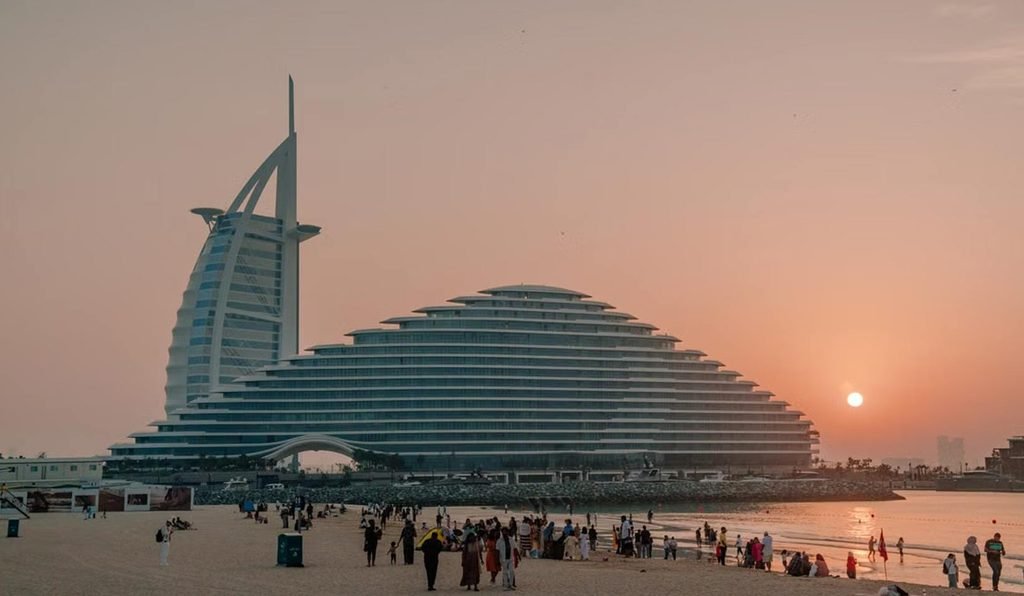
Sunset Beach sits right across from the Burj Al Arab, and that view alone makes it worth the trip. It’s one of the most photographed beaches in Dubai for good reason — you get the sail-shaped hotel rising out of the water as your backdrop.
The beach features smart lighting powered by solar and wind energy, which lets you swim safely even after sunset, and it’s open 24 hours a day with free access. That night-swimming option is actually rare among Dubai’s public beaches, so it’s a big draw for people who want to avoid the daytime heat. propertyfinderpropertyfinder
The waves here tend to be a bit stronger than at Jumeirah Beach, which is part of why it’s known as a decent spot for beginner surfers when conditions allow. Lifeguards are on duty during the day for regular swimming hours. propertyfinder
Al Sufouh Beach (Secret Beach / Black Palace Beach)
If you want a beach that still feels untouched, this is the one. Al Sufouh Beach, better known as Black Palace Beach or Secret Beach, sits tucked between Palm Jumeirah and the Burj Al Arab, along a quiet stretch near private residences.
It’s genuinely hard to find if you don’t already know where it is — there’s no big signage, and the access path is easy to miss. That’s exactly its charm. There are almost no facilities here — no toilets, changing rooms, or lifeguards on duty, so it’s not the place for a full day out with kids. hackmd
Snorkelling gear is worth bringing, since the water is known for being clear, and you might spot some marine life. This beach suits people who want peace and quiet more than anything else — solo visitors, couples, or anyone looking to read a book without crowds nearby. bayut
Al Mamzar Beach Park (Public Beach Area)
Al Mamzar sits on the northern edge of Dubai, close to Sharjah, and it’s a bit different from the other beaches on this list because it’s part of a fenced park rather than an open stretch of sand.
The park includes five separate beaches, all patrolled by lifeguards, plus grassy picnic areas, BBQ spots, and swimming pools. Entry costs 5 AED per person, which is a small fee compared to most attractions in the city, and children under two and people of determination get in free. Al Mamzar Beach Park Dubai Guide: Ticket, Facilities & More +2
Mondays and Wednesdays are reserved for women and children only, which is worth knowing if you’re planning a mixed-group visit — you’ll want to pick a different day. On weekdays outside of ladies’ days, the park tends to be much quieter than weekends, when local families fill up the picnic spots early. dubai-online
Facilities & Amenities Across Dubai Public Beaches
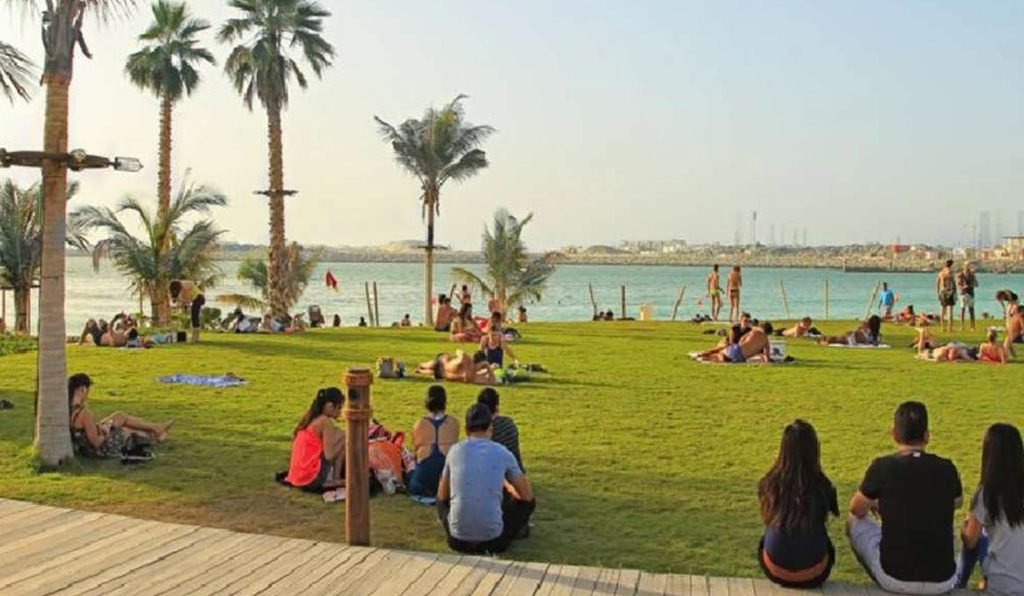
Most of Dubai’s main public beaches share a similar set of basics, though the quality varies a bit from one to the next.
Lifeguards are present at the well-known beaches — JBR, Kite Beach, Jumeirah Beach, Sunset Beach, and Al Mamzar — usually during daylight hours. Lesser-known spots like Black Palace Beach have none, so swim with extra caution there.
Changing rooms and showers are available at every major public beach, letting you rinse off sand and salt before heading home. Public toilets are also standard at the bigger beaches, though smaller or hidden spots may not have any.
Parking is generally free along the coast roads, but it gets tight on weekends at popular beaches like Kite Beach and JBR, so arriving early in the day helps.
Accessibility for people with disabilities has improved a lot in recent years. Places like Al Mamzar and JBR have paved, wheelchair-friendly pathways leading down to the sand, and some beaches now offer beach wheelchairs on request.
Safety flags and signage mark out swim zones and warn of any hazards. Stick to the flagged areas, since currents can shift outside the marked zones, especially near Sunset Beach.
Rules & Regulations for Public Beaches
Dubai’s public beaches are relaxed compared to many cities, but there are still rules worth knowing before you go.
Dress code requires modest swimwear. Bikinis and swim trunks are fine, but going topless or wearing very revealing swimwear isn’t allowed on public beaches.
Swimming hours are generally daylight hours, since that’s when lifeguards are present. A few beaches, like Sunset Beach, allow supervised or lit swimming after dark.
Drone usage is restricted across most of Dubai, including its beaches, and you typically need prior permission from the Dubai Civil Aviation Authority to fly one. Don’t assume it’s fine just because you see open sky.
Photography for personal use is generally allowed, but commercial photography or filming usually needs a permit, especially near government buildings or private residences along beaches like Al Sufouh.
BBQs and camping aren’t permitted on the open public beaches like JBR or Kite Beach. Al Mamzar Beach Park is the exception, with designated BBQ areas set up for that purpose.
Pets are not allowed on most public beaches, so leave your dog at home unless a beach specifically states otherwise.
Water sports like jet skiing, kite surfing, and paddleboarding are allowed in designated zones, usually through licensed rental operators rather than bringing your own gear and going wherever you like.
Environmental rules ask visitors to avoid littering, not disturb marine life, and stay clear of any protected reserve zones. Fines apply for littering on Dubai’s beaches, so it pays to take your rubbish with you.
Best Times to Visit Dubai’s Public Beaches
Dubai’s weather swings hard between seasons, and that changes everything about when to go.
From November through March, temperatures are mild and pleasant, making it comfortable to be outside any time of day. This is peak beach season, and it shows in the crowd sizes.
From May through September, the heat becomes intense, often passing 40°C. Locals mostly stick to early mornings or after sunset during these months, and beaches tend to be much quieter in the middle of the day simply because it’s too hot to enjoy.
As for time of day, mornings (before 9am) are the calmest and coolest, ideal for a swim or a run before the sun gets strong. Afternoons get busy and hot, especially in summer. Evenings, once the sun starts to dip, are when most residents show up — cooler air, golden light, and a livelier atmosphere.
Weekdays are noticeably quieter than weekends (Friday and Saturday in the UAE), when families and groups flood the popular spots.
The UV index in Dubai stays high year-round, so sunscreen matters even on a cloudy day, and it’s smart to reapply every couple of hours if you’re out for long.
Public Beach Activities
Beyond just swimming, Dubai’s public beaches double as open-air activity hubs.
Swimming is possible at all the main beaches, though water conditions vary — calmer near Jumeirah Beach, slightly livelier near Sunset Beach.
Running and fitness tracks run along Kite Beach and JBR, both popular with early-morning joggers and cyclists.
Volleyball courts are set up at JBR and Kite Beach, often with pickup games you can join if you’re up for it.
Paddleboarding is offered through rental stands at Kite Beach and JBR, usually with short lessons for beginners.
Surfing conditions show up occasionally at Sunset Beach and Kite Beach when the wind and swell line up, though Dubai isn’t known as a major surf destination the way some coastlines are.
Photography spots are everywhere, but Sunset Beach stands out for the unobstructed Burj Al Arab view, especially around golden hour.
Family play zones with shaded seating and kids’ equipment are strongest at JBR and Al Mamzar, making them the easiest picks for a day out with young children.
Accessibility & Transportation
Getting to Dubai’s public beaches is fairly simple thanks to the city’s transport network.
The Dubai Metro runs close to several beach areas — the Red Line has stops near JBR and Dubai Marina, while other beaches like Kite Beach and Jumeirah require a short taxi or bus ride from the nearest station.
Bus routes connect most residential areas to the main beach zones, though schedules can be infrequent outside peak hours.
Taxis and ride-hailing apps like Careem and Uber are the easiest way to reach beaches that aren’t right next to a metro stop, especially quieter ones like Al Sufouh Beach.
Parking is free at most public beaches, though spaces near JBR and Kite Beach fill up quickly on weekends.
Walking paths and cycling tracks run along large sections of the coast, particularly the stretch linking Jumeirah, Kite Beach, and Umm Suqeim, making it possible to walk or cycle between several beaches in one outing.
Sustainability & Environmental Efforts
Dubai has put real effort into keeping its coastline clean as the city has grown.
Regular beach cleaning initiatives run through Dubai Municipality, with daily sand grooming and litter collection at the main public beaches. Volunteer beach clean-up events also happen throughout the year, often organized by community groups and environmental organizations.
Marine protection zones exist along parts of the coast to safeguard coral and marine life, particularly near Jebel Ali, limiting activities like fishing and anchoring in sensitive areas.
Waste management at the busier beaches includes bins spaced along the sand, though visitors are still expected to carry out anything the bins can’t handle, especially on quieter or undeveloped beaches with no facilities at all.
As a visitor, small habits go a long way — using reef-safe sunscreen, avoiding single-use plastics, and never leaving food scraps behind, since they attract pests and can harm local wildlife.
Tips for First-Time Visitors
A little preparation makes any beach trip smoother.
What to bring: your own towel, sunscreen, water, and cash or a card for food stalls, since not every beach has rental gear on-site.
Sun protection matters more than people expect in Dubai. Reapply sunscreen often, wear a hat, and try to avoid direct midday sun between 12pm and 3pm in summer.
Safety precautions include swimming only in marked zones, keeping an eye on children near the water, and checking flag warnings before going in, since conditions can change quickly at beaches like Sunset Beach.
Avoiding crowds usually comes down to timing — early mornings, weekdays, and the cooler months between November and March are your best bet for a quieter beach.
As for which beach suits who: families tend to do best at JBR or Al Mamzar, thanks to shallow water and play areas. Solo travellers or anyone wanting quiet often prefer Al Sufouh Beach. Couples looking for a scenic, romantic setting usually head to Sunset Beach for that Burj Al Arab backdrop.
Conclusion
Dubai’s public beaches give you a real slice of the city’s coastline without spending a single dirham, and each one has its own personality. JBR brings energy and convenience, Kite Beach brings sport and community, Sunset Beach brings the postcard view, and Al Sufouh gives you a rare bit of quiet. Al Mamzar rounds it out with a family-park feel further along the coast.
There’s no need to pick just one. Spend a morning jogging at Kite Beach, catch a sunset at Umm Suqeim, and save a lazy afternoon for Al Mamzar with the family. Dubai’s coastline was built to be explored, not just visited once — so take your time working through it.